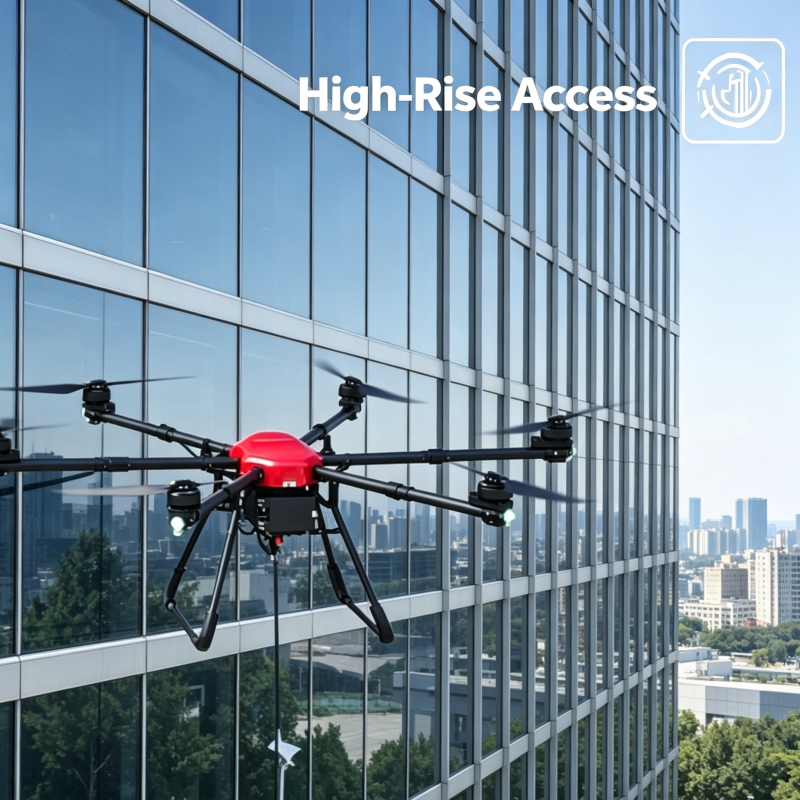
For commercial cleaning contractors, facility management firms, and enterprise property teams evaluating new aerial maintenance equipment, compliance is the top priority before procurement. Many buyers pause their upgrade plans due to a core industry question: Are window cleaning drones legal for commercial projects? In short, window cleaning drones are legally operable in most global regions under standardized regulatory frameworks. However, legality is conditional, and operational non-compliance can lead to fines, project suspensions, and invalid insurance claims. Clarifying are window cleaning drones legal under local aviation rules helps businesses make compliant, risk-free equipment investment decisions.
Most regulatory confusion stems from mixing consumer drone rules with commercial industrial drone operations. Buyers often ask are window cleaning drones legal without distinguishing between recreational flight and paid building maintenance services. Commercial window cleaning drones involve high-pressure water systems, urban low-altitude flight, and close-range building operation, which require dedicated certification and approval. Once standard compliance conditions are met, the answer to are window cleaning drones legal is fully positive for long-term commercial deployment.
Are window cleaning drones legal? Discover key aviation rules, certification, insurance and airspace permits you need to operate commercial window cleaning drones legally in 2026.
Legal Prerequisites: When Window Cleaning Drones Are Fully Compliant
To eliminate operational risks, B端 buyers must verify four core legal conditions before deploying window cleaning drones. These standards directly determine whether are window cleaning drones legal for official commercial use.
Certified commercial pilot qualification All professional window cleaning drone operations require valid commercial remote pilot licenses issued by local aviation authorities. Personal recreational certificates do not apply to paid facade and window cleaning projects. Without formal certification, no region can confirm are window cleaning drones legal, making pilot training the foundational compliance step for enterprise teams.
Approved urban airspace flight permissions High-rise building cleaning is mostly carried out in urban controlled airspace. Operators must complete pre-flight registration, airspace application, and flight plan filing in advance. Temporary no-fly zones, airport buffer zones, and downtown restricted areas will affect operational validity. Standard airspace approval ensures teams can legally perform cleaning work and completely resolve the doubt of are window cleaning drones legal.
Specialized commercial drone insurance General business insurance does not cover aerial cleaning operations. Professional window cleaning drones require dedicated public liability and equipment insurance to cover property damage, operational accidents, and third-party losses. Most enterprise property tenders mandate valid drone insurance as a bidding qualification, which is a key legal supporting condition for confirming are window cleaning drones legal.
Site authorization and local municipal compliance National aviation regulations provide baseline rules, while local municipal management supplements urban flight restrictions, noise limits, and privacy protection clauses. Teams must obtain building owner’s written operation consent before construction. Dual compliance of national aviation rules and local policies fundamentally guarantees legal operation and answers are window cleaning drones legal for actual project scenarios.
Global Legal Status Overview for Commercial Buyers
From a B2B procurement perspective, mainstream global markets support legal commercial application of window cleaning drones after standardized compliance. No major economy imposes a full ban, which is why professional cleaning enterprises are rapidly adopting this equipment. Understanding regional regulatory differences helps buyers layout cross-region service capabilities and accurately confirm are window cleaning drones legal in target markets.
The United States, EU countries, the UK, Australia, and most Asian regions allow commercial window cleaning drone operations. Differences mainly lie in certification difficulty, airspace approval cycles, and risk assessment standards. As long as enterprises follow local commercial drone management specifications, they can obtain legal operating qualifications and completely eliminate compliance concerns regarding are window cleaning drones legal.
Common Compliance Errors That Cause Legal Risks
In actual commercial operations, most legal disputes are not caused by equipment issues but irregular manual operations. Many teams mistakenly believe window cleaning drones can be operated freely, resulting in regulatory penalties. Avoiding these typical errors ensures stable legal operation and completely solves the confusion of are window cleaning drones legal.
Common violations include unlicensed commercial flight, operating in restricted airspace without approval, using recreational drone qualifications for paid projects, lacking special drone insurance, and failing to file flight plans. Standardizing operational processes is the core for cleaning enterprises to maintain long-term legal qualifications and fully release the application value of window cleaning drones.
B2B Buyer FAQs
Q1: Are window cleaning drones legal for formal bidding projects? Yes. After completing pilot certification, airspace approval, insurance registration and site authorization, window cleaning drones fully meet the legal requirements of commercial bidding and enterprise outsourcing projects.
Q2: Is it necessary to apply for permits for every cleaning mission? For urban high-rise projects, real-time airspace confirmation and temporary flight approval are required to ensure each operation complies with current regulatory rules and verify are window cleaning drones legal on-site.
Q3: Does official legal recognition mean zero operational risks? Legal compliance eliminates regulatory risks, but teams still need to implement standardized flight control, obstacle avoidance and safety protection procedures to avoid property damage accidents.
Conclusion
For B2B procurement and enterprise operation teams, the answer to are window cleaning drones legal is clear: fully legal under standardized commercial compliance systems. Window cleaning drones are recognized and regulated by global aviation authorities, with clear qualification thresholds and operational specifications. Enterprises that complete standardized certification and process compliance can safely deploy window cleaning drones to reduce labor costs, improve operational efficiency, and enhance market competitiveness in commercial building maintenance services.