
Read all news

Close
Close

Based on integrity, win-win cooperation
2026-09-22
What PSI pressure can a cleaning drone handle? This is one of the most common technical questions from property managers and cleaning contractors when sourcing aerial cleaning equipment. Too low pressure leaves stubborn grime untouched, while excessive PSI risks damaging glass, curtain walls or delicate exterior cladding. Hoch has engineered its cleaning drone lineup with carefully calibrated pressure systems to balance powerful cleaning performance and surface protection.
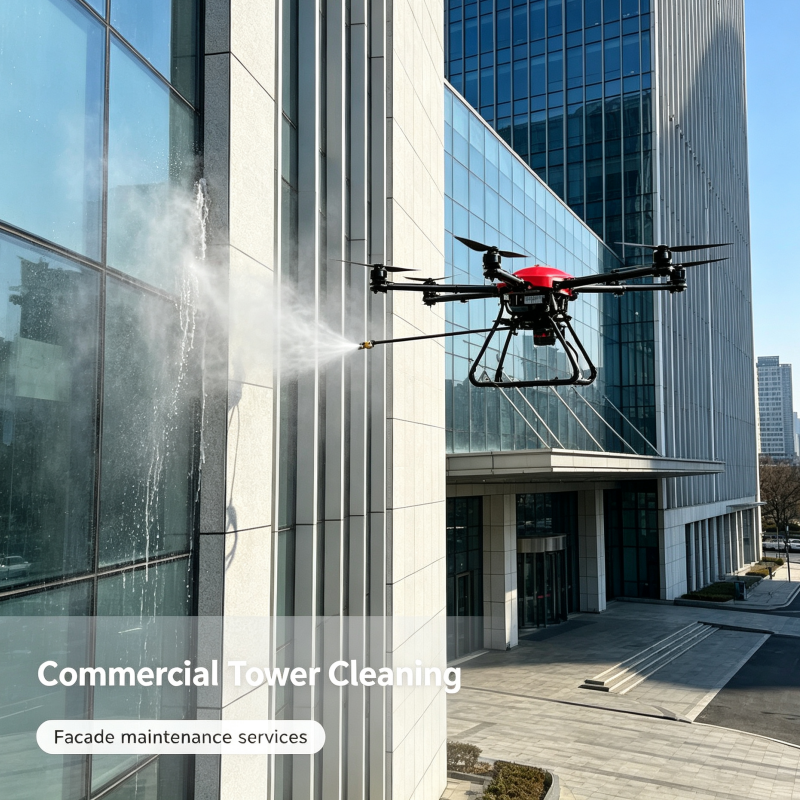
Hoch cleaning drone supports adjustable PSI pressure ranging from 80 PSI up to 220 PSI, covering most commercial exterior cleaning jobs. For routine dust and light stain removal on apartment exterior walls, operators can set low PSI around 80–120 PSI to clean safely without scratching surfaces. When tackling tough deposits like bird droppings, heavy rain streaks and industrial grime on skyscraper curtain walls, users can crank the pressure to 150–220 PSI for deep cleaning.
Unlike generic cleaning drones with fixed pressure output, the Hoch cleaning drone comes with an on-site pressure control module. Operators adjust the PSI value remotely during flight, switching pressure quickly between different wall sections on the same building project. This flexible setting avoids overpressure damage on fragile materials such as thin glass panels, aluminium composite panels and aged paint facades.
Many clients confuse the maximum rated PSI with continuous working PSI. The peak pressure of the Hoch cleaning drone reaches 220 PSI, but the recommended long-term operating range stays under 180 PSI for stable drone flight. Running at sustained high PSI creates extra water thrust, which may affect drone stability. Hoch’s built-in flight stabilizer counteracts water recoil, keeping the cleaning drone steady even at higher working pressure.
Before selecting pressure settings, always evaluate your building facade material. Hard concrete surfaces tolerate higher PSI, while glass curtain walls require medium-low pressure to prevent cracks. The technical team at Hoch provides free pressure guidance for each project, helping operators pick the optimal PSI setting before starting any high-rise cleaning work.
Choosing the right PSI setting directly impacts cleaning quality, job safety and building asset protection. With the Hoch cleaning drone, you gain adjustable, reliable pressure control that adapts to nearly all exterior cleaning tasks. If you want custom PSI configuration for your next commercial cleaning project, reach out to Hoch for detailed technical support and equipment quotations.
Investing in a versatile Hoch cleaning drone eliminates guesswork for every cleaning scenario. Its precise PSI tuning ensures long-term facade safety, reduces maintenance costs, and delivers professional, streak-free cleaning results for all commercial building exterior projects year-round.
For glass curtain walls, we recommend 80–120 PSI on the Hoch cleaning drone. This range removes surface dirt without risking sealant damage or glass stress from high-pressure water impact, perfectly fitting daily high-rise window maintenance work.
Yes. The remote control unit allows pilots to increase or decrease PSI in real time during flight, switching between light dust removal and heavy grime cleaning without landing the drone, greatly improving on-site cleaning efficiency.
Solar panels require lower pressure, typically 60–100 PSI, to protect the anti-reflective coating. The Hoch cleaning drone’s adjustable system handles this range perfectly for regular PV farm and rooftop solar maintenance tasks.
Not always. Excessive PSI can damage surfaces and reduce drone flight stability due to water recoil. Matching PSI to the surface material delivers both safer and more consistent cleaning results for all building exteriors.
HOT NEWS
What PSI Pressure Can a Cleaning Drone Handle? Find Hoch’s Specs Here2026
What PSI Pressure Can a Cleaning Drone Handle?...
2022-12-26
Is an Obstacle Avoidance Drone Essential for Safe High-Rise Cleaning?
Is an Obstacle Avoidance Drone Essential for Sa...
2022-12-26
Best Drone for Commercial Solar Panel Cleaning: Hoch Industrial PV Cleaning UAV
Best Drone for Commercial Solar Panel Cleaning:...
2022-12-26
Commercial Cleaning Drone Manufacturer: Hoch Industrial Aerial Cleaning Solutions 2026
Commercial Cleaning Drone Manufacturer: Hoch I...
2022-12-26