Automated Window Washing Equipment: Hoch Aerial Systems for High-Rise Facades
2026-09-29
Automated Window Washing Equipment: Hoch Aerial Systems for High-Rise Facades
Commercial towers, hotels and office campuses rely on clean glass facades to project a professional image, yet manual window washing remains slow, dangerous and expensive. Property managers and cleaning contractors now turn to aerial washing systems to replace rope-access crews, scaffolding and building maintenance units. Hoch, an industrial aerial cleaning manufacturer with global export experience, designs aerial washing platforms that combine tethered power, obstacle avoidance and adjustable water pressure, giving B2B buyers a dependable path to safer and faster high-rise maintenance.
Why Automated Window Washing Equipment Is Replacing Manual Methods
Manual window washing depends on skilled workers suspended at extreme heights, which creates fall risks, weather restrictions and high insurance premiums. Rising labour costs and stricter safety regulations accelerate this transition across global commercial property markets. Automated window washing equipment changes this picture by keeping operators safely on the ground while the system works on the glass. A single operator can control the automated window washing equipment remotely, covering large curtain wall areas in a fraction of the time required by traditional crews. For engineering firms managing premium commercial assets, automated window washing equipment also delivers consistent quality on every pass, reducing the need for rework and follow-up inspections.
The Hoch aerial washing system uses a tethered power supply to support non-stop operation across dozens of floors, eliminating the battery downtime that limits portable systems. Its anti-collision sensing system detects window frames, signage and protruding architecture in real time, while the adjustable nozzle switches between soft washing and high-pressure rinsing according to the glass condition. This combination of endurance, intelligence and flexibility is why facility teams rank Hoch aerial systems among the most practical investments in modern building maintenance.
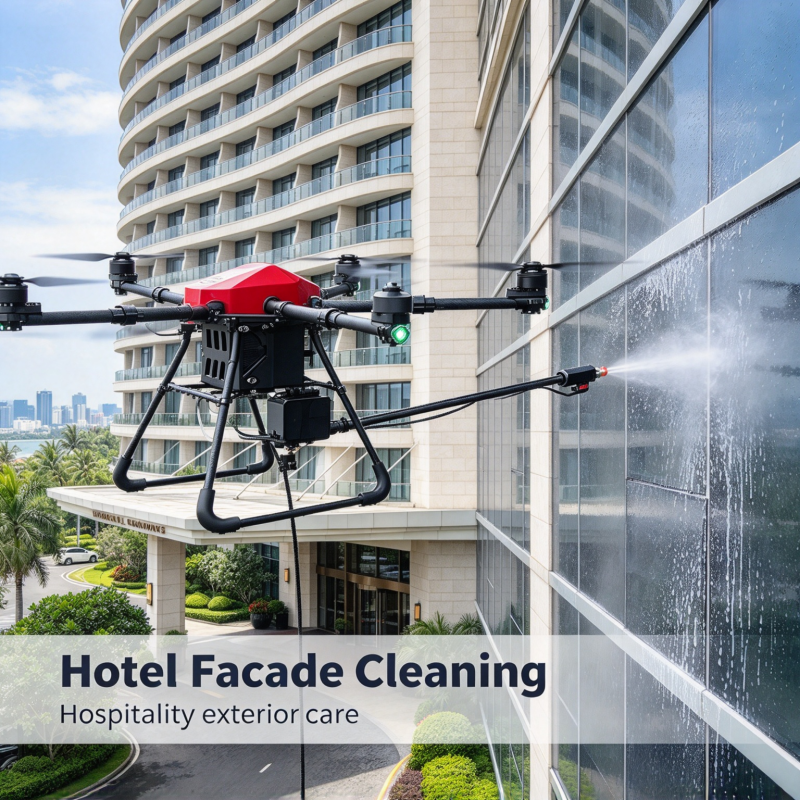
Hoch aerial washing systems are engineered around real job-site requirements rather than consumer drone modifications. The onboard spray system of the automated window washing equipment feeds filtered water and biodegradable detergent through precision nozzles, dissolving grime, smog residue and bird droppings without leaving streaks. Operators monitor every window section through the ground station display, adjusting pressure, spray angle and flight path on demand. The result is automated window washing equipment that adapts to curved facades, recessed windows and complex architectural details with minimal supervision.
Every Hoch aerial washing unit passes factory calibration and pressure tests before shipment, verifying stability, flow consistency and obstacle detection across the full operating range. The engineering team provides remote tuning support, allowing clients to adjust cleaning parameters for local water hardness, climate and facade materials. This manufacturer-level service, combined with spare parts inventory and operator training, gives procurement teams the long-term reliability they expect from industrial-grade automated window washing equipment. Built-in telemetry records every cleaning pass, giving managers auditable data on coverage and water usage for each project report.
Where Automated Window Washing Equipment Delivers the Best Value
Office towers and skyscrapers are the most obvious applications, but automated window washing equipment benefits many building types. Hotels maintain guest-facing glass year-round without disrupting arrivals, shopping centers clean atrium facades during business hours, and corporate campuses schedule regular exterior programs without closing public areas. Airports and transit hubs also use aerial washing equipment to keep large glass structures presentable while minimizing operational interference.
For solar-integrated facades, automated window washing equipment protects coated glass and photovoltaic surfaces through adjustable low-pressure settings, preventing the micro-damage that pressure washing can cause. Facility managers appreciate that the system never requires workers to hang from rooftops or operate heavy lifts, reducing safety paperwork and simplifying site coordination. Stadium canopies, convention centers and mixed-use complexes now use the same technology, because manual access on these structures is slow and disruptive. Operators can document every pass for stronger service reporting.
Automated Window Washing Equipment vs Scaffolding and Rope Access
Compared with scaffolding, automated window washing equipment eliminates assembly and dismantling periods that can take days on high-rise projects. Compared with rope access, it removes workers from dangerous positions and avoids the weather delays that stop manual operations. The system also produces less overspray and causes minimal disruption to tenants, pedestrians and storefront business, which is a decisive advantage in dense urban districts.
While high-pressure washing remains necessary for heavy industrial grime, the Hoch aerial system supports multiple cleaning modes on one platform. Contractors can run soft washing for routine glass maintenance and switch to stronger pressure when tackling accumulated pollution. This flexibility reduces the number of machines a company must own, improving equipment utilization and return on investment across the full service portfolio.
Cost, Safety and Compliance Benefits
Cost control is one of the strongest reasons to adopt automated window washing equipment. One ground-based operator can replace a multi-person rope-access crew, cutting payroll, insurance and liability exposure. The system also reduces water usage through precision targeting, supporting sustainability targets that matter to corporate clients. Over multiple maintenance cycles, these savings compound and protect the asset value of the building envelope.
Worker safety improves dramatically when teams deploy aerial washing equipment. Operators never climb facades or work from suspended platforms, which lowers accident risk and simplifies compliance with work-at-height regulations. Hoch automated window washing equipment is built and documented to support CE, FCC and RoHS certification requirements, easing import clearance and regulatory review in Europe, North America and Southeast Asia.
Field results from Hoch clients reinforce these advantages: several commercial cleaning companies report completing curtain wall projects with half the crew of traditional methods, while property owners note fewer re-cleaning cycles after switching to systematic aerial washing. These outcomes come from years of factory testing and continuous collaboration between Hoch engineers and international operators, refining spray patterns and flight stability across real job sites in multiple climate zones. Deployments now span more than fifteen countries worldwide, a track record that supports confident procurement decisions.
Conclusion: Invest in Hoch Automated Window Washing Equipment
As building owners demand faster, safer exterior care, aerial washing equipment is becoming standard for professional facility management. Hoch combines manufacturing expertise, certified hardware and complete after-sales training in every system delivery. If your team maintains high-rise glass, hotel facades or large commercial buildings, contact Hoch today to request specifications, case studies and a tailored quotation for your next automated window washing equipment project.
FAQ
Is automated window washing equipment safe for high-rise buildings?
Yes. Hoch automated window washing equipment uses tethered power, obstacle avoidance and stable hovering, keeping operators on the ground while cleaning glass facades at significant heights with consistent results.
Can automated window washing equipment handle curved or complex facades?
Yes. The Hoch system adjusts flight path and spray angle in real time, adapting to curved glass, recessed windows and irregular architectural features without manual intervention.
How much does automated window washing equipment cost to operate?
Operating cost is low because one operator replaces a multi-person crew. Precision water targeting and reduced re-cleaning frequency lower long-term maintenance expense compared with manual methods.
What after-sales support does Hoch provide?
Hoch provides operator training, remote calibration, spare parts inventory and global technical support for every automated window washing equipment delivery.