Can Drones Power Wash High-Rise Buildings? A Practical Execution Guide
2026-11-09
Can Drones Power Wash High-Rise Buildings? A Practical Execution Guide
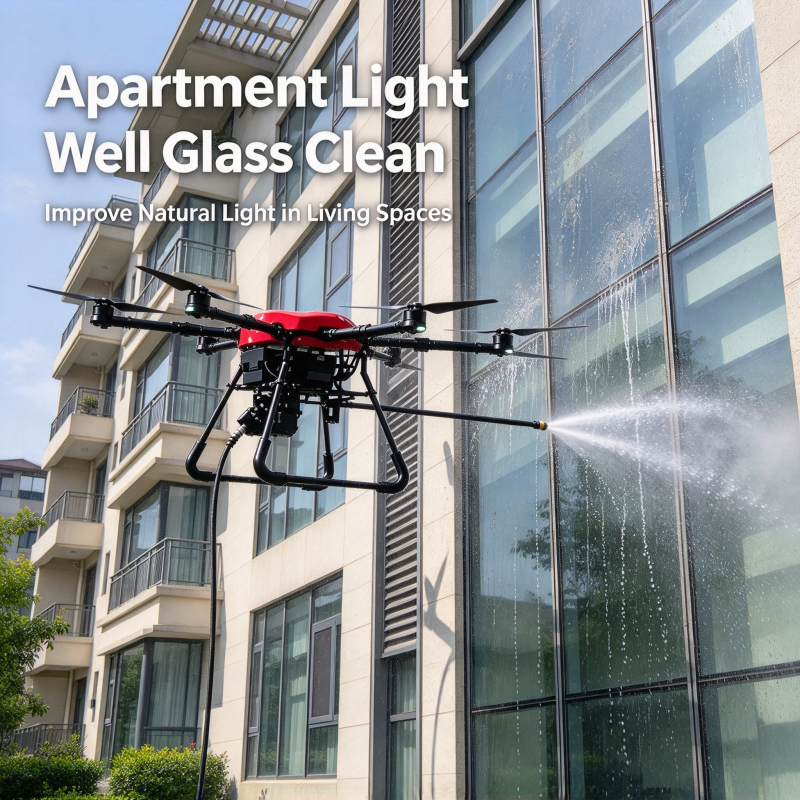
Yes, they can. The more useful question for contractors and property teams is how to run the job so it is safe, repeatable and accepted by the client. Power washing high-rise buildings works when three conditions are met: the surface is sound, the equipment carries enough pressure and water, and the crew plans the work before the aircraft leaves the ground. This guide focuses on execution: feasibility screening, site survey, logistics, permits, crew roles, weather decisions, quality acceptance and the limits of power washing high-rise buildings.
– Ground tank and hose staging for power washing high-rise buildings
Feasibility Screening Before You Commit
Not every facade is a suitable target for power washing high-rise buildings. Screening starts with the material: glass, coated aluminium, concrete, stone and painted render all tolerate different pressure levels. Next comes condition, because loose sealant, spalling concrete or cracked panels should be repaired first. Access matters too, since the aircraft needs a clear standoff and a safe launch area. Finally, water availability decides whether power washing high-rise buildings is practical on site, because a building without a ground supply needs a tanker or a temporary connection.
What a Site Survey Must Capture
A survey turns assumptions into a plan for power washing high-rise buildings. The crew records building height, facade geometry, protruding features such as balconies and mullions, and any openings that must be protected. Wind exposure matters on corners and between towers, where turbulence complicates power washing high-rise buildings. The survey also notes public areas below, because a dropped stream or drifted aircraft affects pedestrians. Photographs taken during the survey become the acceptance baseline, protecting both parties if disputes arise.
Ground Logistics: Water, Power and Staging
Power washing high-rise buildings depends on steady supply more than on flight skill. A ground tank, pump and hose feed the aircraft, and the tether carries power so the flight does not stop for batteries. Staging areas should be fenced, marked and kept clear of vehicles during power washing high-rise buildings, with hose routes planned to avoid sharp bends that reduce pressure. Operators also confirm drainage so runoff does not pool against the building or enter sensitive areas. Getting these basics right allows power washing high-rise buildings to continue for a full shift without interruption.
Permits, Airspace and Insurance
Compliance is part of the method for power washing high-rise buildings, not paperwork to finish later. Local aviation rules may restrict altitude, distance from people and flight over occupied buildings, and some cities require notification before power washing high-rise buildings begins. Site permissions from the building owner and tenant coordination belong in the same checklist. Insurance should be confirmed in writing, because clients increasingly ask for evidence before awarding facade contracts. A supplier that provides certification documents and operating guidance makes this stage far easier.
Crew Roles and Shift Design
Clear roles prevent delays during power washing high-rise buildings. A pilot controls the aircraft, a spotter watches the facade and the area below, and a ground technician manages water, power and hose tension. Rotating these tasks reduces fatigue during long shifts of power washing high-rise buildings, which improves both safety and finish quality. Briefings before each shift confirm the zone, the pressure setting and the stop signal. When a crew knows exactly who decides to pause work, power washing high-rise buildings stays controlled even when conditions change quickly.
Weather Windows and Daily Go/No-Go Decisions
Wind is the deciding factor for power washing high-rise buildings. Above a defined threshold, the aircraft cannot hold a stable standoff, and the jet becomes unpredictable. Rain reduces visibility and washes dirt back onto clean sections, while direct sun dries water too fast and leaves marks. A written go/no-go check each morning prevents rushed judgements. Teams that respect these windows find that power washing high-rise buildings produces cleaner results with fewer repeat visits, and clients notice the difference in schedule reliability. Documenting each decision also protects the contractor if a client disputes a delay.
Zone Planning and Execution Sequence
For power washing high-rise buildings, work is divided into zones by elevation and facade plane. Each zone is cleaned in overlapping horizontal passes, starting from the least visible area so the crew can confirm settings before moving to the front of the building. Cleaning from the top down avoids dirty water running over finished sections. The operator records pressure, flow and coverage for each zone, giving the client a traceable account of power washing high-rise buildings across the whole elevation.
Acceptance Criteria and Handover
Quality should be defined before work starts. Typical criteria cover uniform appearance, no streaks, no damage to sealant or coatings, and no residue on frames or glazing. A joint inspection at the end of each zone settles questions early instead of at the final walkthrough. Handover includes before-and-after photographs, the pressure settings used and any areas flagged for repair. This documentation turns power washing high-rise buildings from an informal service into a measurable deliverable that property managers can defend in audits.
Records, Reporting and Repeat Contracts
Owners value consistency across a portfolio of power washing high-rise buildings projects. A short report per building, listing dates, zones, settings and observations, supports maintenance planning and budget requests. Over time the reports reveal patterns, such as grime accumulating faster on north-facing walls or near traffic corridors, and cleaning frequency can be adjusted accordingly. Contractors who keep this discipline win renewals, because clients can see exactly what power washing high-rise buildings delivered and when the next cycle is due.
Where Power Washing High-Rise Buildings Stops Working
Honest limits protect reputations. Very delicate surfaces, historic stone with fragile detailing and buildings under repair may not suit high-pressure work, and those cases call for lower-pressure soft washing instead. Interior glazing, sealed cavities and operable windows need protection or exclusion. High wind, poor visibility and unsafe ground conditions are stop conditions, not challenges to overcome. Knowing where power washing high-rise buildings should not be used is as important as knowing how well it performs elsewhere.
Conclusion
Can drones power wash high-rise buildings? Yes, and the results depend far more on planning than on hardware alone. Screen the building, survey the facade, secure water and power, confirm permits and insurance, assign clear roles, respect weather limits, work zone by zone and hand over documented evidence. Hoch supplies industrial cleaning drones with redundant flight control, adjustable pressure and tethered supply, plus training, spare parts and technical support for contractors building a repeatable service. Contact our team for specifications, trial arrangements and a quotation for your next project.
FAQ
Is power washing high-rise buildings allowed in every city?
Most locations permit it with operator certification, site permission and altitude limits, so check local rules before scheduling.
How much water does a cleaning drone need per shift?
Consumption depends on flow setting and facade area. A ground tank sized for the day’s zones keeps operations steady without repeated refills.
Can one crew handle a full tower?
A three-person team, covering pilot, spotter and ground support, typically manages a tower in staged zones across several shifts.
What happens if wind picks up mid-shift?
Work pauses at the defined threshold, the aircraft returns, and the zone resumes when conditions improve, protecting the crew and the facade.