Can a High Pressure Cleaning Drone Replace Manual Pressure Washing in 2026?
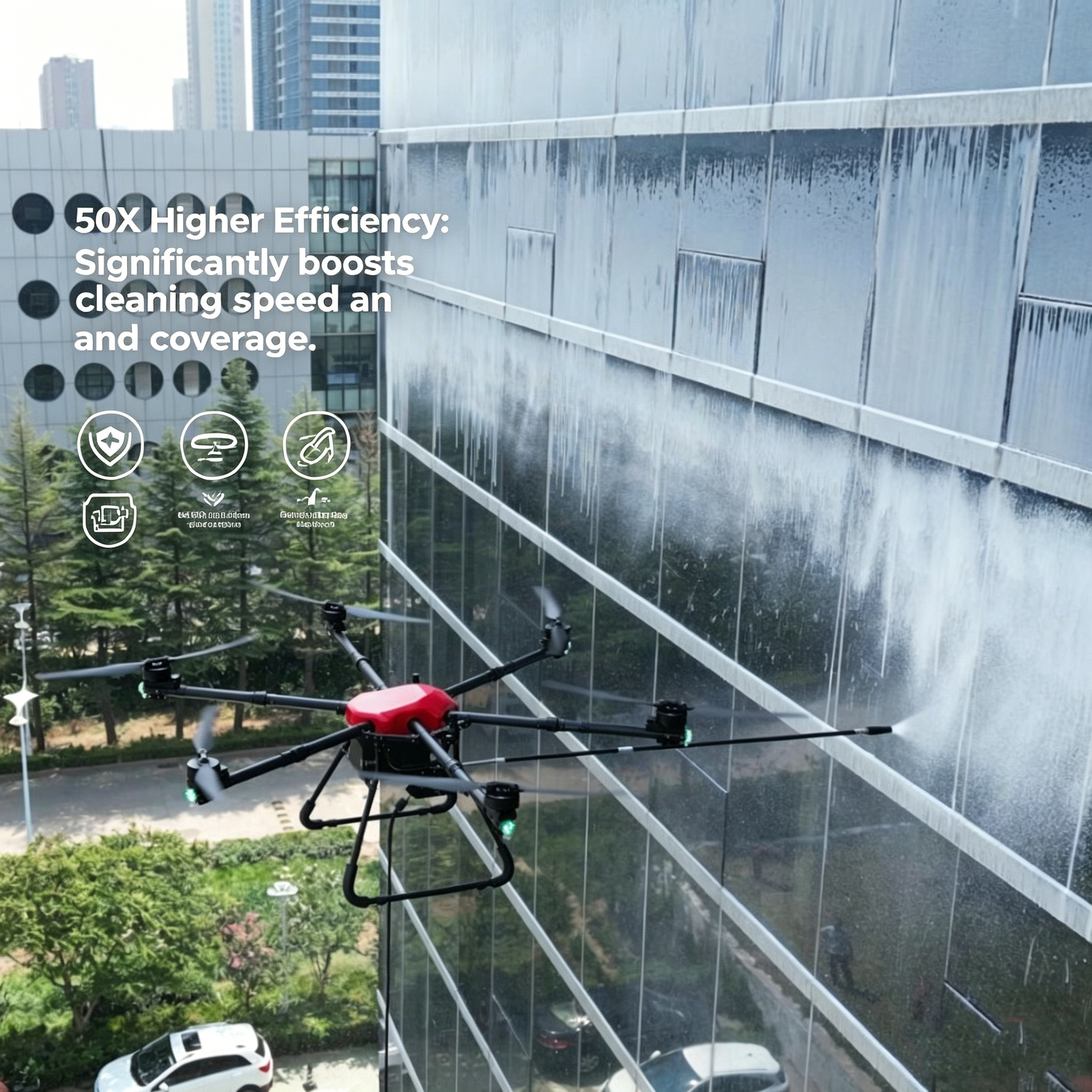
Every year, building owners and facility managers face the same tough question: how do you clean dirty, moldy, stained building exteriors without risking worker safety or overspending on labor?
For decades, manual high-rise pressure washing has been the only solution. But it comes with endless headaches: high fall risks, inconsistent cleaning results, expensive labor costs, weather delays, and even accidental roof or glass damage.
Today, many professionals are switching to a high pressure cleaning drone for exterior facade cleaning, rooftop moss removal, and high-rise wall washing. But the biggest debate remains: can drone pressure washing truly replace traditional manual cleaning for commercial and residential buildings?
In this article, backed by real on-site cleaning footage, we break down the true advantages, limitations, and future of high-pressure drone cleaning — so you can decide if it’s the right upgrade for your building maintenance workflow.
Why Traditional Pressure Washing Is Becoming Outdated
Manual pressure washing was once the gold standard for deep building cleaning. However, modern buildings are getting taller, facade designs are becoming more complex, and safety regulations are getting stricter. Traditional methods can no longer keep up.
1. High-altitude work is inherently risky Manual power washing requires workers to operate heavy, high-recoil equipment on slippery rooftops, curved facades, or suspended rope lines. Even with full safety gear, wind gusts, wet surfaces, and unstable body positioning create constant fall hazards. This increases insurance costs, project risks, and legal liability for property companies.
2. Manual cleaning results are never consistent Different workers use different water pressure, cleaning angles, and wiping techniques. Some areas get over-washed and damaged, while hidden corners remain full of moss and dirt. Uneven cleaning leads to quick mold regrowth and repeated maintenance.
3. Labor costs keep rising year by year Skilled high-altitude cleaning crews are difficult to hire and expensive to retain. Small and large cleaning projects both require multiple workers, long working cycles, and expensive equipment rental — greatly increasing long-term building maintenance budgets.
4. Weather easily delays entire projects Wind, rain, and high temperature suspend manual high-rise cleaning. Many property managers face delayed facade maintenance, resulting in worsening building aging and ugly exterior stains.
How a High Pressure Cleaning Drone Solves These Industry Pain Points
A professional high pressure cleaning drone is not a simple “flying cleaner.” It is an industrial-grade exterior deep-cleaning system built specifically for modern building maintenance challenges.
Equipped with adaptive high-pressure water jet technology, intelligent fixed-distance hovering sensors, and anti-wind stabilization systems, the drone can safely and thoroughly clean almost all hard-to-reach building surfaces, including high-rise glass curtain walls, sloped tile roofs, curved exterior walls, factory rooftops, and narrow facade gaps.
Unlike consumer drones that only clean surface dust, industrial high-pressure cleaning drones deliver adjustable strong water flow to strip stubborn contaminants, including:
-
Roof moss and black mold
-
Rainwater oxidation stains
-
Industrial soot and exhaust deposition
-
Bird droppings and organic dirt
-
Long-term weathered wall grime
The most critical improvement is balanced cleaning protection. The drone automatically adjusts water pressure according to different materials. It uses high pressure for tough dirt areas and soft pressure for delicate glass, tiles, and waterproof layers, achieving deep cleaning without surface scratches or coating damage.
Real Benefits That Property Managers Care About Most
1. Zero High-Altitude Safety Risks
All cleaning operations are controlled on the ground. No workers need to climb, suspend, or stand on high rooftops. This completely eliminates fall accidents and reduces property safety liability, making building maintenance fully compliant with modern safety standards.
2. Uniform, Streak-Free Professional Cleaning Quality
Automated flight paths and fixed-distance pressure control ensure every inch of the facade receives the same cleaning strength. The result is a bright, uniform, spotless building exterior with no blind spots, no streaks, and no residual dirt.
3. 3–5 Times Faster Project Speed
Drones work continuously without fatigue or weather interruption. A large building facade cleaning project that takes manual teams one week can be finished in just 1–2 days, greatly optimizing maintenance efficiency.
4. Significant Long-Term Cost Reduction
Drone cleaning saves high-altitude labor costs, scaffolding fees, insurance expenses, and post-cleaning repair costs. Regular drone deep cleaning also delays building aging, protecting long-term building asset value.
Does It Work for All Building Types?
Yes. The versatile high pressure cleaning drone fits nearly all modern cleaning scenarios:
-
Commercial high-rise office facade cleaning
-
Industrial factory rooftop pressure washing
-
Luxury villa tile roof moss removal
-
Shopping mall and public building maintenance
-
Urban landmark building exterior renovation
Final Verdict: Will Drones Replace Manual Pressure Washing?
In short: High-pressure cleaning drones will become the mainstream standard for future building exterior maintenance.
Manual cleaning will still exist for tiny, low-height areas, but for high-rise, large-area, and high-standard building cleaning, drone technology is safer, cleaner, faster, and more cost-effective.
As safety standards rise and labor costs continue to increase, intelligent drone cleaning is no longer an option — it is an inevitable industry upgrade.
Let’s Discuss (Comment Below)
Do you think a high pressure cleaning drone can fully replace manual pressure washing in the next few years? Have you encountered safety risks or poor cleaning results with traditional high-rise washing? Leave your opinion in the comment section below — we’d love to hear your real maintenance experience.