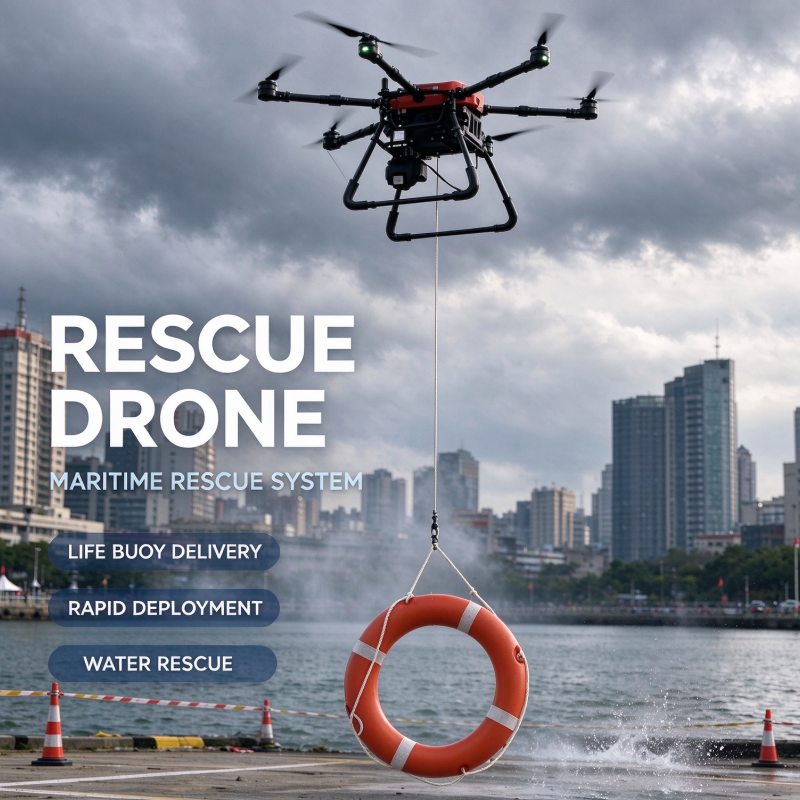
Rescue Drone Lifebuoy Drop: Hoch Aerial Lifesaving System
2026-10-20
Rescue Drone Lifebuoy Drop: Hoch Aerial Lifesaving System
When someone falls into open water, every second matters and the first minutes decide the outcome. Traditional rescue teams often need boats, divers or shorelines that take time to reach the victim. An aerial system now delivers a floating ring directly over a person in distress, reducing the gap between incident and support. Hoch, an industrial aerial equipment manufacturer exporting worldwide, builds an aerial lifesaving system engineered for fast, repeatable deployment, giving lifeguards, emergency services and waterfront operators a dependable tool for saving lives.
– Hoch rescue drone lifebuoy drop assisting a swimmer beyond the surf line
Why a Rescue Drone Lifebuoy Drop Is Essential
Water rescues are a race against time, fatigue and currents. An aerial system reaches a victim in seconds rather than minutes, flying over obstacles and choppy water that delay boats and swimmers. This speed gives a distressed person immediate flotation, stabilising them while trained crews complete the recovery. For lifeguard stations, ports, flood zones and coastal facilities, the system extends response capability far beyond what a single shoreline team can cover.
Safety improves for rescuers as well. An aerial system keeps responders away from hazardous water, strong currents and cold conditions, reducing the risk of secondary incidents. Operators direct the aircraft from a safe position, so the system supports first response without endangering the team that must eventually reach the victim. This combination of speed and safety makes the rescue drone lifebuoy drop a valuable addition to any professional water-safety program.
Hoch Rescue Drone Lifebuoy Drop Technology
Hoch designs the platform around a rugged multirotor design with a purpose-built release mechanism. The ring is held securely during flight and deployed on command, dropping accurately over the target even in wind and darkness. The system supports night operation with search lighting, helping crews locate and assist victims in low-visibility conditions. Operators control the system from a ground station with a live camera feed, guiding the ring precisely to the person in the water.
Every Hoch rescue drone lifebuoy drop passes factory calibration and release testing before shipment, verifying deployment timing, flight stability and accuracy across the full operating range. The platform is built and documented to support CE, FCC and RoHS certification requirements, easing import clearance and regulatory review. Spare parts inventory and structured operator training complete the package, giving rescue agencies the long-term reliability they expect from life-saving equipment.
Applications of a Rescue Drone Lifebuoy Drop
An aerial system supports a wide range of scenarios. Lifeguard services use it to reach swimmers beyond the surf line, while coastal and port authorities deploy it for incidents in harbours and shipping lanes. Flood response teams use the rescue drone lifebuoy drop to assist people stranded by rising water, and marina operators rely on it for emergencies around docks and moorings. Each deployment lets the system deliver flotation where boats and swimmers cannot arrive quickly.
The system also supports larger rescue scenes by holding spare rings ready for multiple drops in a single sortie. Because operators manage the rescue drone lifebuoy drop from a ground station, teams can rehearse procedures and keep skills current with regular training. Across these applications, the platform shortens response time and strengthens the first line of defence in water safety.
Site coordination improves because the ground station fits in compact spaces and can be positioned near the waterline. Teams can preposition the system at high-risk points, ready for launch. Regular drills keep operators skilled and verify deployment accuracy, so the equipment performs reliably when an incident occurs.
Rescue Drone Lifebuoy Drop vs Traditional Methods
Compared with boats and divers, the rescue drone lifebuoy drop reaches the victim first, without navigating waves or underwater hazards. Compared with throwing lines from shore, it overcomes distance and obstacles that limit manual throws. The system also operates in conditions that delay conventional craft, including darkness and moderate wind, giving responders options when minutes count.
While recovery still requires boats or swimmers, the rescue drone lifebuoy drop provides the critical early flotation that prevents submersion. This early support improves survival odds and gives professional crews a safer, calmer situation when they arrive. For agencies weighing response capability, the rescue drone lifebuoy drop is a cost-effective force multiplier that complements existing rescue assets.
Cost, Reliability and Compliance Benefits
Cost control matters for public and private rescue agencies. A rescue drone lifebuoy drop lets one operator cover a wide area, reducing the number of crew and vehicles needed for initial response. The platform supports repeated sorties with minimal consumables, keeping operating cost low while expanding coverage. For waterfront facilities, this makes the system an affordable addition to existing safety infrastructure.
Reliability is essential in life-saving equipment. The Hoch rescue drone lifebuoy drop undergoes factory release testing and pressure checks, verifying that every ring deploys on command. Remote tuning and operator training keep the system ready for real incidents. Documented certification and testing records support procurement and compliance reviews, giving agencies confidence in the equipment they deploy.
Thorough documentation strengthens service records for agencies and supports audit and compliance reviews. The system logs flight time, deployment events and water conditions for each sortie, giving managers data to review training and readiness. This transparency helps rescue teams refine procedures and maintain high standards over time.
Client results confirm the advantage. Several coastal authorities report deploying the rescue drone lifebuoy drop to assist swimmers and boaters faster than boat-based response, while flood teams note improved reach in emergencies. These outcomes come from years of factory testing and close collaboration between Hoch engineers and international operators, refining release timing and flight stability across real water scenes in multiple climate zones. Deployments now span more than fifteen countries worldwide, a track record that supports confident procurement decisions.
Reliable performance across diverse water conditions further strengthens the case for aerial lifesaving systems at scale. Operators benefit from consistent training and dependable results. Engineering consultants recommend aerial response for high-traffic coastlines and industrial waterfronts, where minimizing exposure and maximizing reach is essential. Regular training keeps responder skills current with evolving standards across regions. This commitment supports consistent quality for every agency.
Conclusion: Invest in a Hoch Rescue Drone Lifebuoy Drop
As water safety demands grow and response times tighten, the rescue drone lifebuoy drop is becoming standard for professional rescue agencies. Hoch combines manufacturing expertise, certified hardware and complete after-sales training in every rescue drone lifebuoy drop delivery. If your team protects beaches, ports, rivers or flood zones, contact Hoch today to request specifications, case studies and a tailored quotation for your next rescue drone lifebuoy drop system.
FAQ
How fast can a rescue drone lifebuoy drop reach a victim?
The rescue drone lifebuoy drop flies directly to the target in seconds, delivering flotation faster than boats, divers or shoreline throws.
Is a rescue drone lifebuoy drop safe for rescuers?
Yes. Operators control the system from the ground, keeping responders away from hazardous water and reducing secondary incident risk.
Can a rescue drone lifebuoy drop operate in darkness?
Yes. The Hoch platform supports night operation with search lighting, helping crews locate and assist victims in low-visibility conditions.
What after-sales support does Hoch provide?
Hoch provides operator training, remote calibration, spare parts inventory and global technical support for every rescue drone lifebuoy drop system.